If you only research companies in English, you typically cover less than half of the companies in any given country. Using local-language databases reveals several times more companies that English searches never surface.
You receive a request to research potential business partners overseas. You search Google in English. You check LinkedIn. You filter through ThomasNet or Kompass. These are all valid steps. But if you stop there, your company list will have significant gaps.
This is especially true for ASEAN and China. English-language sources alone cannot give you the full picture of local companies in these markets, because the vast majority of business information is published only in local languages.
This article demonstrates the gap between English-only and local-language research using real examples from Thailand and China. It also provides a comprehensive list of government and commercial databases available in each country.
(If you are considering outsourcing overseas company research, service details are available at the end of this article.)
How Much of the Market Does an English-Only Search Actually Cover?
When researching Thailand or China, English-only searches typically cover just 30-50% of all companies. The remaining 50-70% are only accessible through local-language sources.
The reason is straightforward.
In Thailand and China, most companies do not have English websites. The ones that do are a subset that already trades with foreign companies. Domestic-focused mid-size and small businesses only have websites in their own language.
On top of that, government-operated business registration databases in most countries only support searches in the local language. These databases contain virtually every company operating in the country. Searching in English returns nothing.
| Search Language | Coverage | Primary Sources |
|---|---|---|
| English only | Major corporations and exporters (30-50%) | Google (English), LinkedIn, ThomasNet, Kompass |
| English + local language | Comprehensive list including SMEs (80-95%) | Above + government DBs, local-language business directories, industry associations |
Country-by-Country Database Guide — Government and Commercial
Databases for local-language company research fall into two categories: government and commercial. Government databases contain raw registration data. Commercial databases aggregate and enrich this data into value-added services.
The right choice depends on your research objective. Government databases are used to verify whether a company is officially registered and what its registered business scope covers. Commercial databases provide processed information that government sources do not offer, such as shareholder network diagrams, litigation history, and credit scores.
Important Note — Many Databases Require VPN Access
Many country-level business databases are not accessible from Japan due to geo-blocking. VPN access is frequently required, and this should be factored into your research planning from the outset.
Chinese databases in particular are almost completely blocked from outside China. Tianyancha, Qichacha, and the National Enterprise Credit Information Publicity System are all inaccessible from Japanese IP addresses. VPN access through a China-based server, or access through local staff, is essential.
Thai and Vietnamese databases can also be problematic, with unstable connections and CAPTCHA challenges when accessed from abroad.
Thailand Company Databases
Thailand has well-developed government databases that provide free access to registration data, factory information, and listed company financials.
Government Databases
| Database | Operator | URL | What You Can Find | Language |
|---|---|---|---|---|
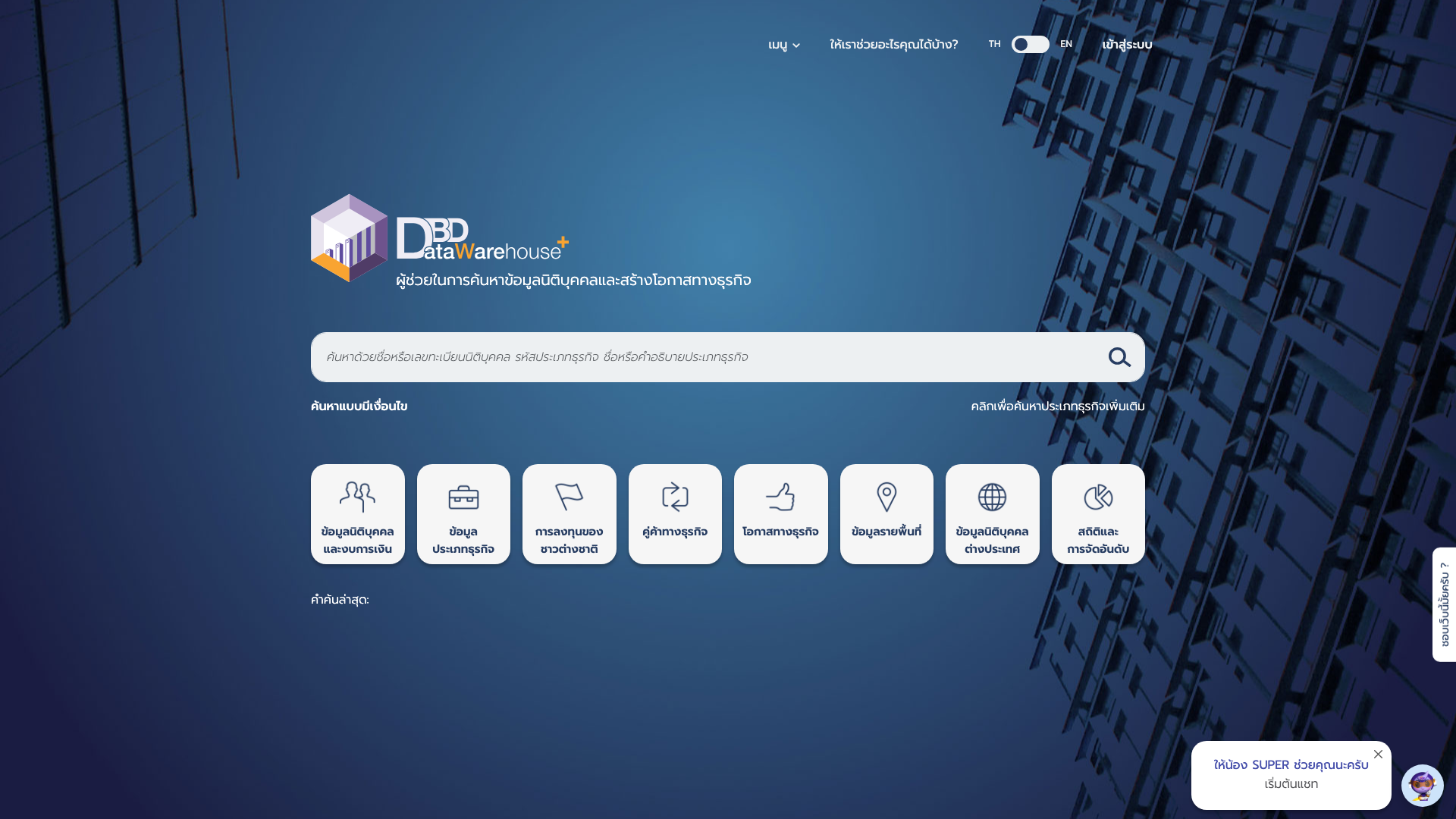
| DBD DataWarehouse+ | Dept. of Business Development, Ministry of Commerce | datawarehouse.dbd.go.th | Corporate registration, shareholder structure, financial statements. Approx. 2.05 million entities registered, of which approx. 970,000 are active (as of Dec 2025) | Thai / English |
| DBD Open Data | Dept. of Business Development, Ministry of Commerce | opendata.dbd.go.th | Lists of newly registered entities, foreign business licenses, and dissolved entities. Excel download available | Thai |
| DIW Factory Database | Dept. of Industrial Works, Ministry of Industry | diw.go.th | Nationwide registered factories searchable by industry code. Essential for manufacturing research | Thai |
| SEC Company Information | Securities and Exchange Commission | market.sec.or.th | Listed company disclosures, financial statements, annual reports | Thai / English |
| BOI Promoted Companies | Board of Investment | boi.go.th | List of BOI-promoted companies. Excel download available (up to 200 companies) | English |
DBD DataWarehouse+ underwent a major system upgrade in 2025, with an improved English interface. Previously Thai-only, it now supports basic searches in English. However, search accuracy remains higher when using Thai.
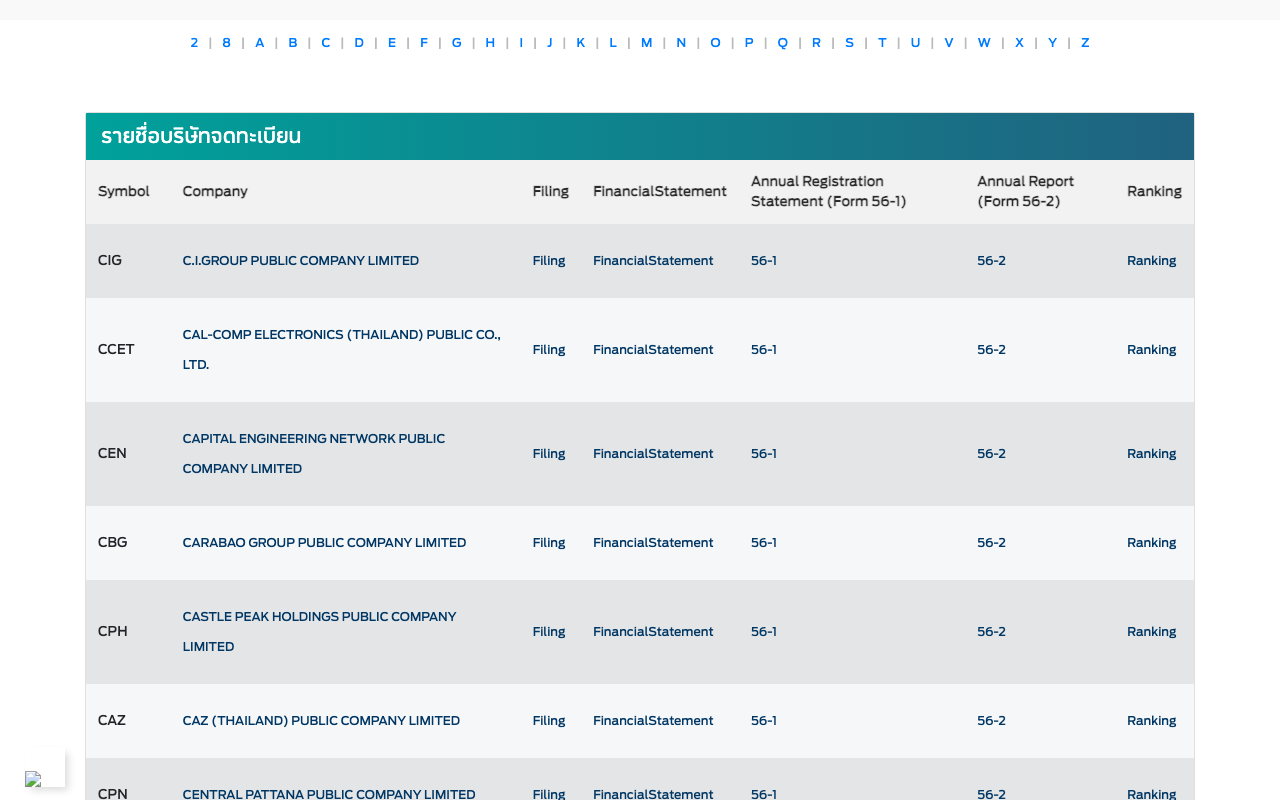
The SEC (Securities and Exchange Commission) website provides access to a full list of Thai listed companies, along with their financial statements and annual reports.
Commercial Databases
| Database | URL | Features |
|---|---|---|
| Creden Data | data.creden.co | Thai corporate credit information and analytics platform. Provides financial analysis and credit ratings based on DBD data |
| DataForThai | dataforthai.com | Search newly registered companies by month, province, and industry. Thai only. Latest data requires registration |
China Company Databases
The most important distinction to understand about Chinese company databases is the clear separation between “government databases” and “commercial enterprise information platforms.”
Commercial platforms like Tianyancha and Qichacha are widely known, but they are not government agencies. They source their business registration data from the National Enterprise Credit Information Publicity System (gsxt.gov.cn), a government database, and then integrate court judgments, patent data, bidding records, and other information to create value-added commercial services.
Government Databases
| Database | Operator | URL | What You Can Find |
|---|---|---|---|
| National Enterprise Credit Information Publicity System (国家企业信用信息公示系统) | State Administration for Market Regulation | gsxt.gov.cn | Business registration data, annual reports, administrative penalties, and abnormal operations lists for all registered enterprises. This is the authoritative source for all company information in China |
| Credit China (信用中国) | National Development and Reform Commission | creditchina.gov.cn | Corporate and individual credit information, blacklists (defaulters on court judgments), administrative permits, and administrative penalties |
The National Enterprise Credit Information Publicity System is the sole official database containing information on every registered enterprise in China. The data on Tianyancha and Qichacha all originates from this system. It is Chinese-only and not directly accessible from Japan.
Commercial Databases
| Database | URL | Scale | Features |
|---|---|---|---|
| Qichacha (企查查/QCC) | qcc.com | Approx. 330 million domestic entities, approx. 580 million globally | Registration data, risk information, affiliated company networks. Over 150 million registered users (as of June 2025, per IPO filing). Broadest range of data sources |
| Tianyancha (天眼查) | tianyancha.com | Approx. 340 million domestic records, approx. 640 million globally | Registration data, shareholder structure, executives, intellectual property, litigation history. Highest brand recognition |
| Aiqicha (爱企查) | aiqicha.baidu.com | Similar scale | Operated by Baidu. Strength lies in integration with Baidu search. Basic features are free |
Both Tianyancha and Qichacha are large-scale platforms that have filed for IPOs. Their underlying data comes from the same government database, but they differ in how they process and supplement the information. Qichacha’s IPO application was accepted by the Shanghai Stock Exchange in October 2025.
All Chinese databases are in Chinese. VPN access through a China-based server is required for access from Japan.
Other Major Asian Country Databases
| Country | Database | Type | URL | English Support | Notes |
|---|---|---|---|---|---|
| South Korea | DART | Government | dart.fss.or.kr | Yes (englishdart.fss.or.kr) | Operated by the Financial Supervisory Service. Listed company disclosures and financial data |
| Vietnam | National Business Registration Portal (NBRP) | Government | dangkykinhdoanh.gov.vn | Partial | Operated by the Ministry of Planning and Investment. English version has limited information. Vietnamese version recommended |
| Vietnam | Masothue | Commercial | masothue.com | No | Search company information by tax ID. Widely used |
| India | MCA | Government | mca.gov.in | Yes | Operated by the Ministry of Corporate Affairs. Search by CIN (Corporate Identity Number). CAPTCHA verification required |
| Indonesia | AHU Online | Government | ahu.go.id | No | Operated by the Ministry of Law and Human Rights. Corporate registration information |
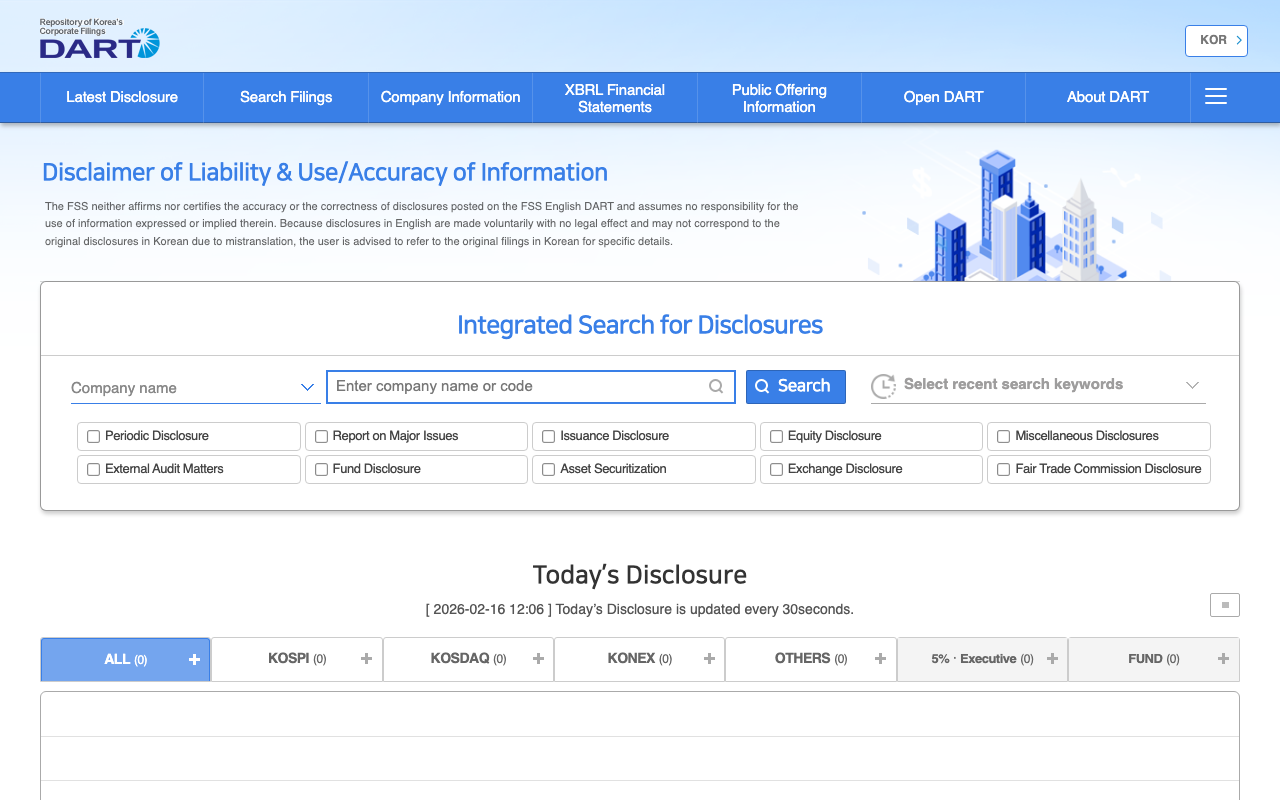
South Korea’s DART is an exception among Asian company databases in its comprehensive English support. The English version (englishdart.fss.or.kr) allows you to search listed company disclosures.
Thailand Example — Thai-Language Searches Reveal a Hidden Universe of Companies
When researching companies in Thailand, an English Google search typically surfaces 20-30 major companies and exporters. But Thailand’s DBD DataWarehouse+ from the Ministry of Commerce contains registration data for approximately 2.05 million entities. The number of companies invisible to English searches is overwhelming.
Searching Google for “Thailand plastic manufacturer” in English returns roughly 20-30 companies that have English websites. The BOI (Board of Investment) English site also allows searches for investment-promoted companies, but only those that received BOI privileges appear there.
Switch to Thai and search for “ผู้ผลิตพลาสติก” (plastic manufacturer), and companies that never appeared in English results start surfacing in large numbers.
The Power of DBD DataWarehouse+
DBD DataWarehouse+, operated by the Department of Business Development (กรมพัฒนาธุรกิจการค้า) under the Ministry of Commerce, provides free access to corporate registration, shareholder structure, and financial statements for entities registered in Thailand.
A critical detail: Thai company registration names follow the format “บริษัท ○○ จำกัด” (○○ Co., Ltd.) in Thai script. This formal name differs from the English trade name, which means English searches frequently fail to match these companies.
DIW Factory Database
Another powerful resource is the factory database published by the Department of Industrial Works (กรมโรงงานอุตสาหกรรม, diw.go.th) under the Ministry of Industry. It allows you to search all registered factories across Thailand by industry code.
For example, searching by the “food processing” industry code returns a complete list of food processing factories nationwide. Where an English Google search might find only 20 food manufacturers, this database can return several hundred.
This database, too, is in Thai. English searches are not supported.
China Example — Every Registered Company Exists in the Government Database
The most commonly overlooked resource in Chinese company research is the government database itself. The National Enterprise Credit Information Publicity System (gsxt.gov.cn) contains records for every registered enterprise in China. Commercial platforms like Tianyancha and Qichacha are built on this foundation.
When researching Chinese companies in English only, results tend to center on export-oriented companies listed on Alibaba’s international site (alibaba.com) or Global Sources. These platforms only feature companies that are set up for international trade.
Switching to Chinese transforms both the quantity and quality of available sources.
The Gap Between English Alibaba and Chinese Databases
Consider searching for chemical manufacturers as an example.
Searching Alibaba’s international site in English returns a few thousand companies registered as chemical manufacturers. But searching Qichacha for “化工” (chemical industry) yields results in the hundreds of thousands.
The fundamental difference is about intended audience. Alibaba’s international site is a platform for overseas buyers. Chinese companies with no interest in exports are not listed there. Commercial databases, on the other hand, are built on China’s business registration data, so they include every company, including those operating solely in the domestic market.
Are English-Site “Manufacturers” Really Manufacturers?
It is not uncommon for companies that call themselves “manufacturers” on English-language websites and platforms to actually be trading companies. Checking registration data in local-language databases is how you verify the distinction.
This is a problem encountered frequently in practice.
You visit the website of a company listed as a “manufacturer” on Alibaba or Global Sources. You see factory photos, and everything suggests in-house production. But when you check the business registration data in the local language, the registered business scope does not include “manufacturing.” It only lists “trading” or “批发” (wholesale).
In other words, the company is simply a trader reselling products manufactured by others.
Delivering such companies to a client who specifically requested manufacturers undermines the credibility of your research. Verifying directly against local-language registration databases prevents this kind of misidentification.
In China, you check the “经营范围” (business scope) on the National Enterprise Credit Information Publicity System or Qichacha. In Thailand, you verify the registered business objectives on DBD DataWarehouse+. Both allow you to determine what a company actually does based on official registration records.
Why English Alone Is Not Enough — Three Structural Reasons
The limitation of English-language company information is not just a language barrier. Three structural factors are at work: national legal frameworks, database design philosophy, and corporate website strategies.
1. Government business databases are designed in the national language
Each country’s business registration database was built for domestic administrative purposes. It was never intended for use by foreigners. Thailand’s DBD DataWarehouse+, China’s National Enterprise Credit Information Publicity System, and South Korea’s DART are all fundamentally designed for searches in the national language.
2. SMEs have no incentive to build English websites
Companies that sustain their business entirely within the domestic market have no reason to invest in English-language websites. Mid-size food processors in Thailand, component manufacturers in Chinese regional cities — these companies only have websites in their own language. They simply do not exist in English search results.
3. English information is biased toward companies that want to be found
Companies listed on English-language business platforms are those actively seeking international trade. They have deliberately placed their information where foreign buyers will find it. Under this structure, established companies with strong domestic revenue and no need for foreign business remain invisible in English.
Conclusion — English Is the Starting Point; Local Languages Reveal the Full Picture
English-language research is the right starting point for building a company list. Major corporations and exporters can be found in English.
But stopping at English means a large number of domestic mid-size and small companies are missing from your list. In Thailand, the approximately 2.05 million entities in DBD DataWarehouse+ are not accessible in English. In China, the complete registration data in the National Enterprise Credit Information Publicity System is not available in English.
Many country-level databases are also geo-blocked, making them inaccessible from Japan without a VPN. Beyond the language barrier, there is an access barrier.
When the goal is a comprehensive view of potential business partners, local-language research is not optional.
| Research Objective | Is English Sufficient? |
|---|---|
| Identify the top 10-20 major players | Often sufficient |
| Build a comprehensive list of 50+ candidates | Local-language research required |
| Verify registration data and financials | Local-language databases essential |
| Determine whether a company is a manufacturer or trader | Verify through local-language registration records |
If you need a comprehensive company list that includes companies you cannot find through English-language research alone, we can help.
We conduct multilingual company research in English, Chinese, and Thai. We directly search government and commercial databases in each country, producing high-accuracy lists that include companies invisible to English-only research.
80+ countries, 350+ projects, starting from 150,000 yen per project.
Service details and inquiries: https://taitonmai.co.jp
Sources
Department of Business Development, Ministry of Commerce, Thailand — DBD DataWarehouse+ (datawarehouse.dbd.go.th) — Approx. 2.05 million registered entities, approx. 970,000 active (as of Dec 2025, DBD official statistics)
Department of Business Development, Ministry of Commerce, Thailand — DBD Open Data (opendata.dbd.go.th)
Department of Industrial Works, Ministry of Industry, Thailand — Factory Search (diw.go.th)
Securities and Exchange Commission, Thailand — SEC (market.sec.or.th)
Board of Investment, Thailand — BOI Promoted Companies Database (boi.go.th)
National Enterprise Credit Information Publicity System (gsxt.gov.cn) — Official database of all registered enterprises in China
Credit China (creditchina.gov.cn)
Qichacha / QCC (qcc.com) — Approx. 330 million domestic entities, over 150 million registered users (as of June 2025, per IPO filing)
Tianyancha (tianyancha.com) — Approx. 340 million domestic records, approx. 640 million globally (as of April 2024)
Aiqicha (aiqicha.baidu.com)
Financial Supervisory Service, South Korea — DART (dart.fss.or.kr)
Ministry of Planning and Investment, Vietnam — National Business Registration Portal (dangkykinhdoanh.gov.vn)
Ministry of Corporate Affairs, India — MCA (mca.gov.in)
Ministry of Law and Human Rights, Indonesia — AHU Online (ahu.go.id)
Research Date: February 16, 2026